
Introduction
Choosing the right AC system is an important decision for any home, office, shop, or commercial property. A well-selected AC system can keep indoor spaces comfortable, control humidity, improve air quality, and operate efficiently for years. However, choosing equipment based only on price or cooling capacity can lead to higher energy bills, uneven temperatures, frequent repairs, and premature replacement.
The process involves much more than buying an air conditioner and having it installed. You need to consider the size of the property, room layout, insulation, climate, expected usage, energy efficiency, installation quality, and ongoing maintenance. The manufacturer and distributor you choose can also have a significant impact on product availability, technical support, spare parts, and after-sales service.
Whether you are replacing an old unit or installing an AC system in a new property, understanding the complete process will help you make a more informed decision. This guide explains what to consider when choosing an AC system, how professional installation works, and what you can do to keep the equipment operating efficiently.
Understanding Your AC System Options
An AC system removes heat from indoor air and transfers it outside, creating a cooler and more comfortable environment. Although all air-conditioning systems work around the same basic refrigeration principles, their designs and applications can vary considerably.
Split AC Systems
Split systems are widely used in homes, apartments, offices, and smaller commercial spaces. They generally consist of an indoor unit and an outdoor condenser connected through refrigerant piping and electrical wiring.
A split AC system can be a practical choice when individual rooms require separate temperature control. Modern models can also provide features such as inverter technology, sleep modes, air filtration, and smart controls.

Central and Ducted AC Systems
For larger properties, a ducted AC system can distribute conditioned air through multiple rooms using a network of ducts. This approach can create a more consistent indoor environment while keeping individual indoor units out of sight.
A ducted AC system requires careful planning because duct design, insulation, airflow, and equipment sizing all influence performance. Poorly designed ductwork can reduce efficiency even when the air-conditioning equipment itself is high quality.
Commercial AC Solutions
Commercial buildings may require larger or more sophisticated AC systems because they have higher occupancy, longer operating hours, larger floor areas, and different heat loads. Depending on the property, suitable solutions may include split systems, packaged units, ducted systems, or variable refrigerant flow technology.
Working with an experienced supplier is particularly important for commercial applications because equipment selection should be based on the building’s actual cooling requirements rather than simply choosing the largest available unit.
How to Choose the Right AC System
The best AC system is not necessarily the most powerful or expensive model. It is the one that matches the property’s cooling requirements while delivering reliable and efficient operation.
Calculate the Required Cooling Capacity
Correct sizing is one of the most important factors when selecting an AC system. An undersized unit may run continuously without adequately cooling the room, while an oversized system may cycle on and off too frequently.
Cooling requirements depend on factors such as room dimensions, ceiling height, window size, sunlight exposure, insulation, occupancy, appliances, and local climate conditions. A professional HVAC technician can perform a proper load assessment before recommending an AC system.
Consider Energy Efficiency
Energy efficiency matters because an AC system can represent a significant portion of a property’s electricity consumption, particularly in hot climates.
Look for equipment with strong efficiency ratings and inverter technology where appropriate. An inverter AC system can adjust compressor speed according to cooling demand rather than repeatedly switching the compressor fully on and off. This can improve temperature stability and potentially reduce energy consumption.
However, efficiency should always be considered alongside correct sizing and installation. Even an energy-efficient AC system can perform poorly if it is badly installed or operated in unsuitable conditions.
Choose a Reliable Manufacturer and Supplier
The equipment itself is only one part of the purchasing decision. A reliable supplier can help with product selection, installation coordination, warranty support, spare parts, and technical assistance.
For customers considering General air-conditioning equipment, working with an established o general ac distributor can make it easier to identify suitable models and obtain appropriate product support.
Likewise, customers researching Carrier equipment can review information from a carrier ac distributor before making a purchasing decision.
Think About Noise and Indoor Comfort
Cooling capacity is not the only consideration. Noise levels can be particularly important in bedrooms, meeting rooms, clinics, and offices.
A good AC system should maintain a comfortable temperature without creating unnecessary noise or excessive airflow. Features such as quiet operating modes and variable-speed compressors can improve the overall experience.
Consider Controls and Smart Features
Modern AC systems may include Wi-Fi controls, programmable schedules, remote monitoring, timers, sleep modes, and automated temperature adjustment. These features can be useful when the property is occupied according to a predictable schedule.
However, advanced features should support your requirements rather than become the primary reason for choosing a particular AC system.
Planning the AC System Installation
Even the highest-quality AC system can deliver disappointing results when installation is poorly planned. Professional installation should therefore be treated as an essential part of the purchase rather than an optional extra.
Select the Correct Indoor Unit Location
The indoor unit should be positioned where air can circulate effectively throughout the room. It should not be obstructed by furniture, curtains, cabinets, or architectural features.
The installation location should also allow technicians to access filters, electrical components, drainage connections, and other serviceable parts.
Position the Outdoor Unit Correctly
The outdoor unit needs sufficient airflow to release the heat removed from the building. Placing it in an enclosed or poorly ventilated area can cause operating temperatures to rise and may reduce AC system efficiency.
The unit should also be installed on a stable surface with appropriate clearance around it. Excessive vibration should be minimized because vibration can contribute to noise and mechanical wear.
Install Refrigerant Lines Carefully
Refrigerant piping connects the indoor and outdoor components of a split AC system. The pipe length, diameter, insulation, and installation method should comply with the manufacturer’s requirements.
Proper insulation is particularly important in hot climates. Poorly insulated refrigerant lines can result in energy losses, condensation problems, and reduced cooling performance.
Ensure Proper Drainage
The indoor unit produces condensate as it removes moisture from the air. This water needs to drain safely away from the unit.
Incorrect drainage installation can cause water leakage, wall damage, unpleasant odors, or microbial growth. Drain pipes should have appropriate slope and should be checked during commissioning.
Complete Electrical and System Checks
Electrical connections should be completed according to manufacturer specifications and applicable safety requirements. Once the AC system has been installed, technicians should test cooling performance, airflow, refrigerant conditions, drainage, electrical operation, and unusual noise or vibration.
A professional commissioning process helps identify installation problems before they become expensive repair issues.
How to Maintain an AC System
Regular maintenance is essential for keeping an AC system efficient and dependable. Maintenance also provides an opportunity to identify small problems before they develop into major failures.
Clean or Replace Air Filters
Air filters capture dust and airborne particles before air passes through the indoor unit. When filters become clogged, airflow can decrease and the AC system may have to work harder to maintain the desired temperature.
Filter cleaning frequency depends on usage, indoor air conditions, pets, dust levels, and the manufacturer’s recommendations. Properties in dusty environments may require more frequent attention.
Keep the Outdoor Unit Clean
The outdoor condenser needs unrestricted airflow. Dust, leaves, dirt, and debris can accumulate around the coil and restrict heat transfer.
The surrounding area should be kept clear, while coil cleaning should be performed carefully to avoid damaging delicate fins. Professional cleaning may be appropriate when substantial buildup is present.
Check Refrigerant Performance
Refrigerant should not normally disappear simply because an AC system is operating. If refrigerant levels are low, there may be a leak or another system problem.
Signs of potential refrigerant issues can include weak cooling, unusually long operating cycles, ice formation, or abnormal system performance. Refrigerant work should be handled by a qualified technician rather than treated as a routine DIY task.
Inspect Drain Lines
Drainage problems can develop gradually. A partially blocked drain may initially produce occasional dripping before becoming a major leak.
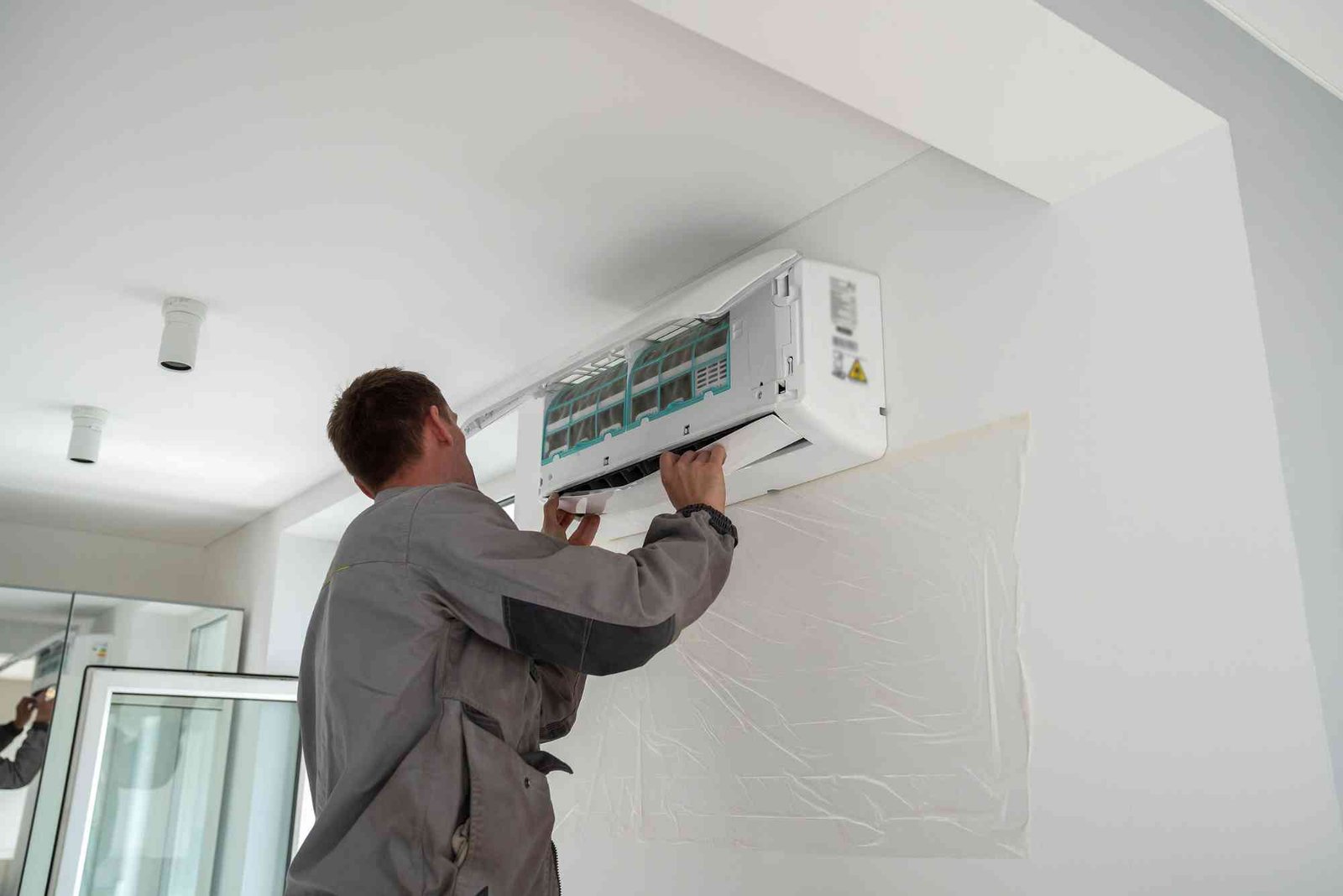
During routine AC system servicing, technicians should inspect the condensate drain and pan, check for blockages, and ensure water is leaving the system correctly.
Schedule Professional Servicing
Professional maintenance should include more than simply washing filters. Depending on the AC system, technicians may inspect electrical connections, coils, refrigerant performance, fan operation, drainage, controls, and other components.
A planned maintenance schedule can help preserve AC system performance and identify worn components before they cause unexpected downtime.
Common AC System Problems and Their Causes
Understanding common warning signs can help property owners respond before a minor issue becomes a major repair.
The AC System Is Not Cooling Properly
Poor cooling can result from dirty filters, blocked airflow, incorrect settings, refrigerant problems, dirty coils, compressor issues, or an incorrectly sized system.
The first step is to check basic settings and airflow. If the problem continues, professional diagnosis is recommended.
The AC System Is Leaking Water
Water leakage commonly relates to blocked drainage, an improperly installed drain pipe, a frozen evaporator coil, or other system problems. Continuing to operate a leaking AC system without identifying the cause can result in property damage.
The AC System Is Making Unusual Noises
Clicking, grinding, rattling, buzzing, or excessive vibration can indicate loose components, fan problems, electrical faults, or mechanical wear. Unusual noises should not simply be ignored, particularly if they become progressively louder.
Energy Bills Suddenly Increase
A sudden rise in electricity consumption may indicate reduced AC system efficiency. Dirty filters, clogged coils, refrigerant problems, failing components, poor insulation, or incorrect thermostat settings can all contribute.
Before replacing the equipment, have the existing AC system inspected to determine whether the problem can be corrected through maintenance or repair.
How to Improve AC System Efficiency
Efficient operation depends on both equipment and user behavior. Keeping doors and windows closed while cooling, using suitable thermostat settings, improving insulation, and reducing unnecessary heat entering the property can reduce the workload placed on an AC system.
Regular maintenance is equally important. Clean filters and coils allow air and heat to move through the equipment more effectively.
It is also useful to avoid setting the thermostat unnecessarily low. A moderate temperature setting can provide comfortable conditions without forcing the AC system to operate continuously at maximum demand.
When Should You Replace an AC System?
Maintenance can extend equipment life, but every AC system eventually reaches a point where replacement becomes more practical than continued repair.
Frequent breakdowns, declining cooling performance, rising energy costs, obsolete components, repeated refrigerant issues, and expensive repairs can all indicate that replacement should be considered.
When evaluating a replacement, compare the total cost of ownership rather than focusing only on the purchase price. A modern, efficient AC system with professional installation may provide better long-term value than repeatedly repairing an inefficient older unit.
The Importance of Professional AC Installation and Maintenance
Choosing professional support can make a significant difference throughout the life of an AC system. Experienced technicians understand equipment specifications, installation requirements, airflow principles, electrical considerations, refrigerant handling, and maintenance procedures.
Professional support also helps ensure that the selected AC system is appropriate for the property. This is especially important for larger homes, offices, retail spaces, and commercial buildings where incorrect equipment sizing can have a substantial impact on comfort and operating costs.
A reputable supplier should be able to explain product specifications clearly, provide appropriate installation support, and offer reliable after-sales assistance.
Choosing, installing, and maintaining an AC system should be approached as one complete process rather than three separate decisions. Start by assessing the property’s cooling requirements, then select appropriately sized and efficient equipment from a reliable manufacturer and supplier. Professional installation ensures that the system is configured correctly, while regular maintenance helps preserve efficiency, comfort, and reliability.
The right AC system can provide years of dependable cooling, but its performance ultimately depends on proper selection, installation, operation, and care. If you are planning a new installation or replacing an existing unit, speak with a qualified AC professional to assess your property and identify the most suitable solution.Discover helpful insights, useful guides, and engaging content on vaping, lifestyle, and related topics with VapeGrove. Whether you are exploring new trends or looking for informative resources, the platform offers content designed for curious readers. Visit VapeGrove to explore more and stay updated with fresh and relevant information.
FAQs
How do I choose the right AC system for my home?
Choose an AC system based on the property’s cooling load, room size, insulation, sunlight exposure, occupancy, layout, energy-efficiency requirements, and expected usage. Professional load calculations are preferable to choosing a unit based only on room size.
How often should an AC system be serviced?
Many AC systems benefit from professional inspection and servicing at least once a year. Systems operating heavily, particularly in dusty or hot environments, may require more frequent maintenance.
How long does an AC system usually last?
The lifespan varies according to equipment quality, installation, operating conditions, and maintenance. A properly installed and regularly maintained AC system can generally provide many years of service, while neglected equipment may require replacement much sooner.
Why is my AC system running but not cooling?
Possible causes include dirty filters, restricted airflow, dirty coils, incorrect settings, refrigerant problems, compressor faults, or an incorrectly sized unit. If basic filter and thermostat checks do not resolve the issue, professional inspection is recommended.
Is inverter AC better than non-inverter AC?
An inverter AC system can offer more precise temperature control and potentially lower energy consumption because the compressor can vary its speed according to demand. Whether it is the better choice depends on usage patterns, climate, budget, and the specific property.
Can I install an AC system myself?
Professional installation is strongly recommended, especially for split and larger AC systems. Refrigerant circuits, electrical connections, drainage, equipment positioning, and commissioning require appropriate technical knowledge and equipment.
What temperature should I set my AC system to?
A comfortable moderate setting is generally preferable to an extremely low temperature. The ideal setting depends on personal comfort, outdoor conditions, humidity, and the property’s insulation and airflow.
How can I make my AC system more efficient?
Keep filters clean, maintain clear airflow around the outdoor unit, close doors and windows while cooling, improve insulation where possible, use appropriate thermostat settings, and schedule regular professional maintenance.
Related Reading: RandM Tornado 15000: Complete Review, Features, and Puff Performance
Related Reading: Painting areas in Baton Rouge, LA
Related Reading: Maintenance and Usage Tips to Get the Best Performance Out of Your Heat-Not-Burn Device
Related Reading: Georgia Visit Visa from Pakistan: Complete Guide